

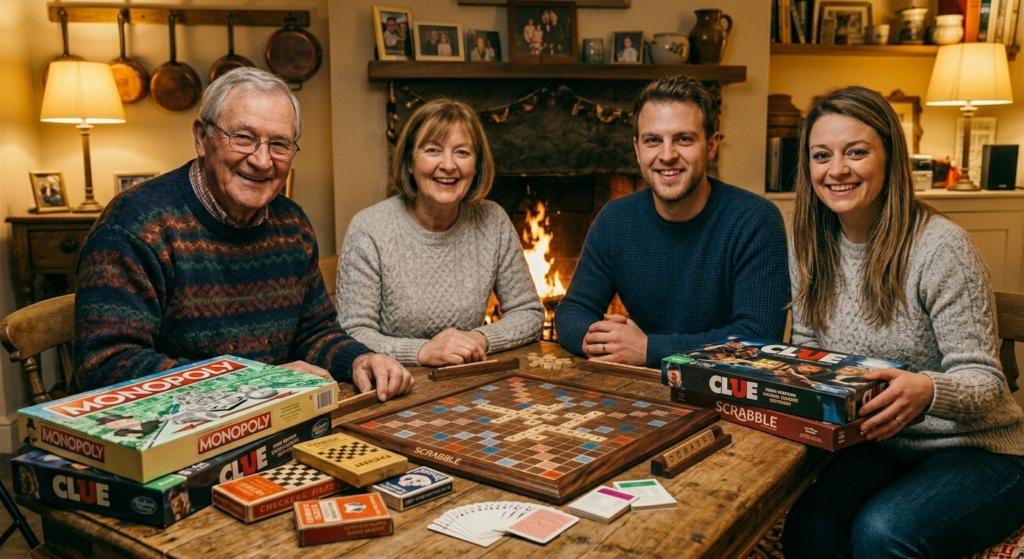
Some games don’t just pass the time — they shape memories, sharpen minds, and bring people together across generations. Create irreplaceable memories. Whether played at a kitchen table during a stormy night, at a family gathering, or in a fiercely competitive match between friends, classic board games hold a special kind of magic that digital entertainment rarely replaces.
Before smartphones filled every quiet moment, there was a familiar ritual:
A box came off the shelf.
Pieces spilled onto the table.
Someone argued about the rules.
And suddenly — everyone was present.
Checkers was the game grandparents taught first — simple enough for a child, yet deep enough to hold lifelong strategy.

Chess wasn’t just black versus white pieces — it was a quiet duel between two minds learning patience and foresight.
Clue transformed ordinary evenings into mysteries filled with suspicion and laughter. Every accusation carried dramatic weight and fun even when the accusation was wildly wrong.
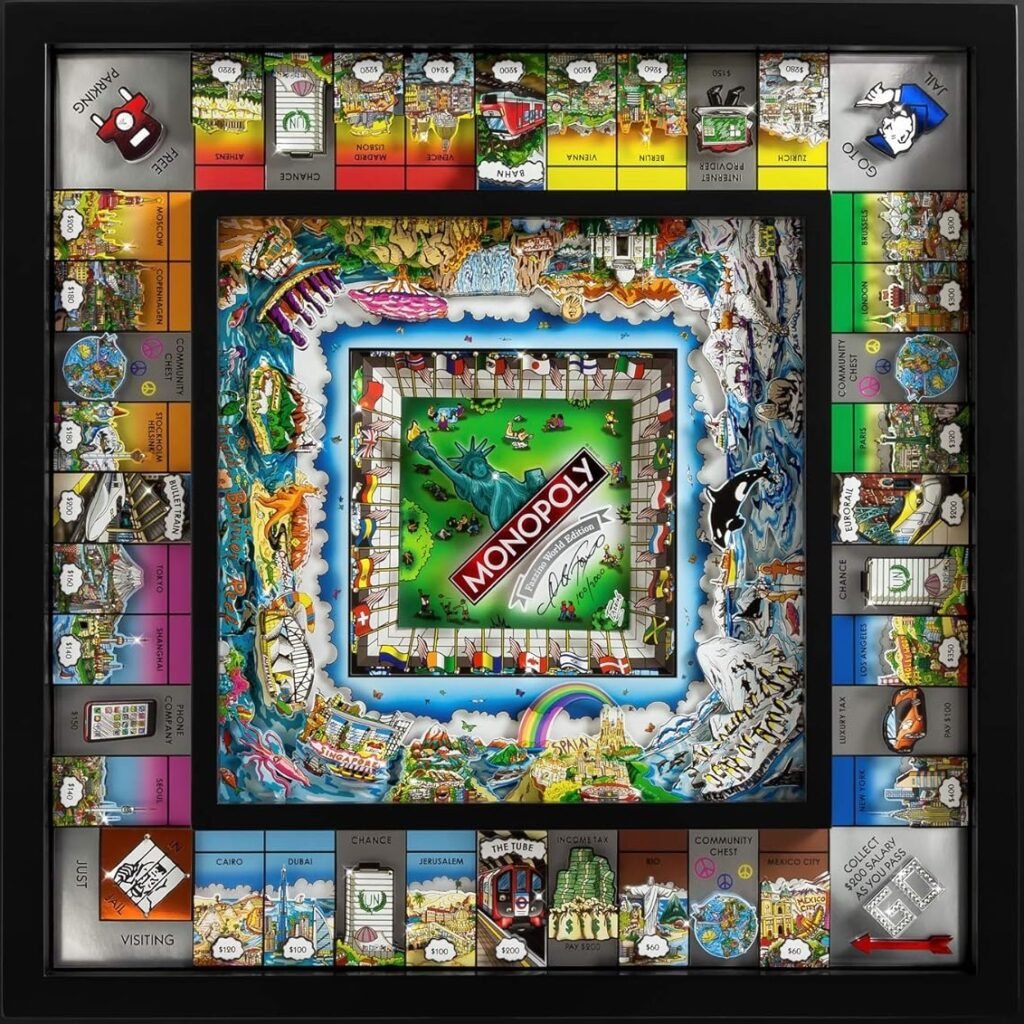
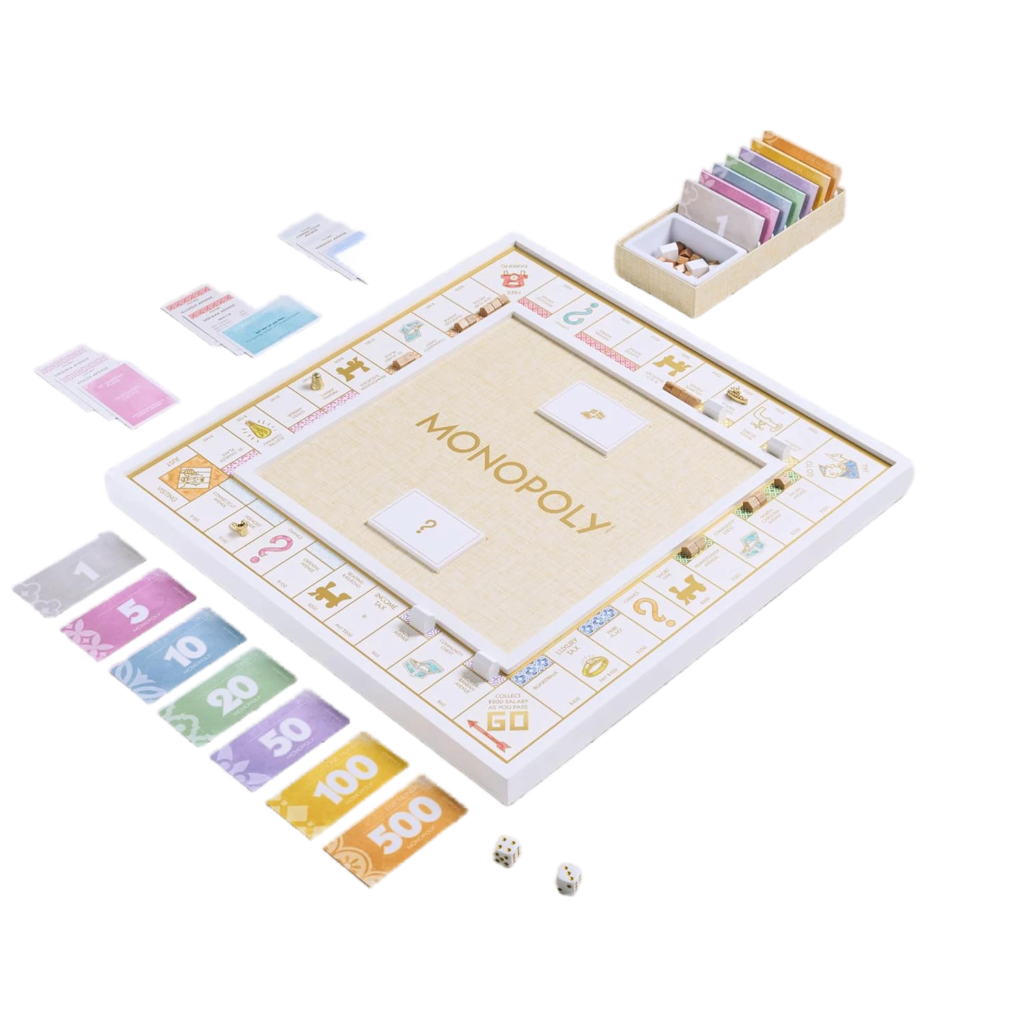
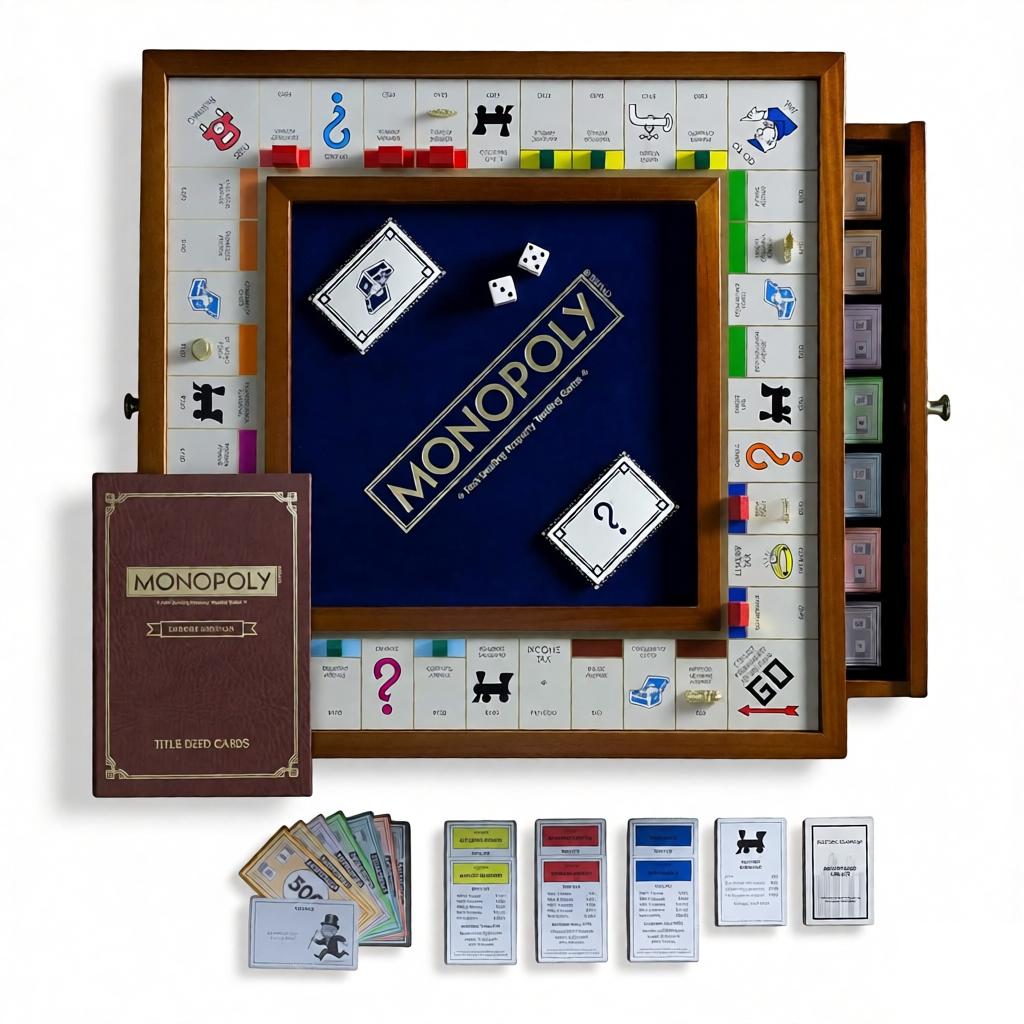
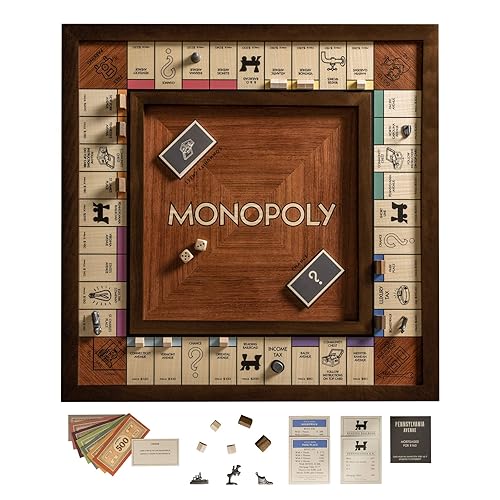
Monopoly stretched across entire afternoons, testing friendships with risky deals, triumphant property empires, and dramatic bankruptcies.
Scrabble turned language into a competition and strategy, where a single clever word could shift the entire game!
Battleship created suspense in silence — each guess echoing with hope and wonder: “Hit… or miss?” 🚢💥
And games like Guess Who, Sorry!, Othello, and Chinese Checkers filled homes with playful tension, deep thinking, and unpredictable comebacks.
These games were never just entertainment.
They were:
– Rainy day traditions
– Family bonding rituals
– Friendly rituals
– Shared memories
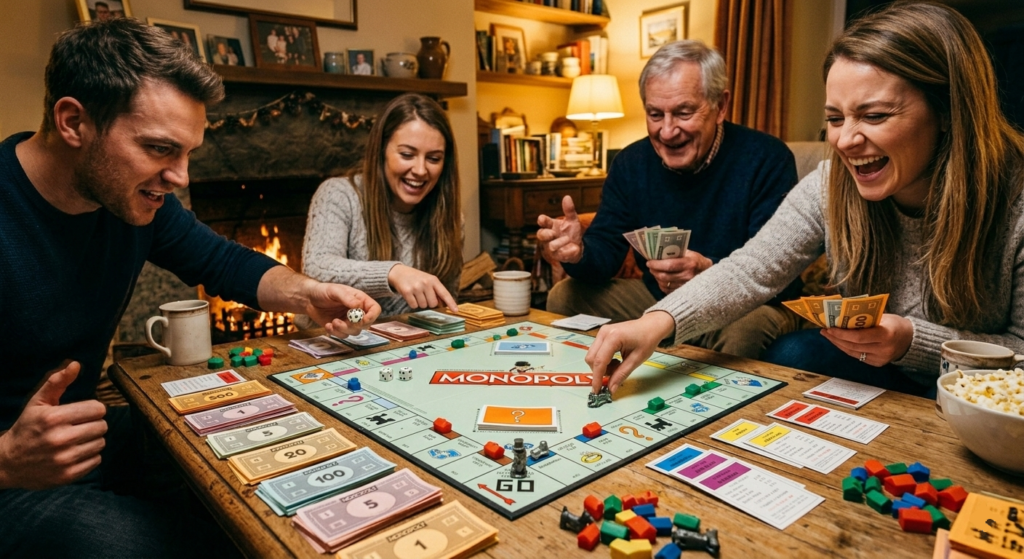
Let’s explore why each of these timeless favorites remain so deeply loved — and why they continue to matter and have mattered for decades, and in some instances, centuries.
Whether you’re planning a family game night or searching for a nostalgic gift idea, these timeless favorites will always be there for us and never go out of style.
Monopoly
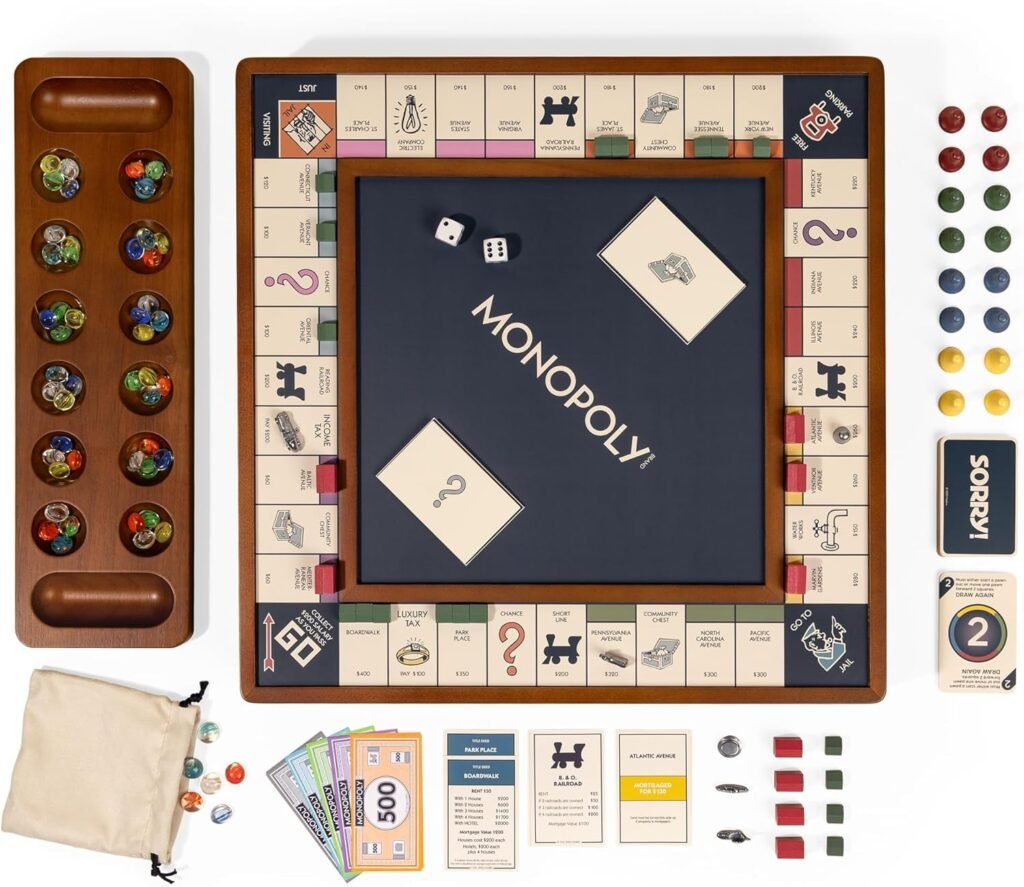
Monopoly is one of the most iconic and widely played board games in the world. If any board game can claim the throne of cultural dominance, it’s Monopoly. Originally derived from The Landlord’s Game designed by Elizabeth Magie in 1903.
Elizabeth Magie, a progressive-minded game designer and advocate of Georgism (an economic philosophy promoting land value taxation), created The Landlord’s Game in 1903. Georgism is an economic philosophy that emphasizes taxing land value as a means of addressing wealth inequality. Magie designed The Landlord’s Game to teach the negative effects of land monopolies. (The part of Monopoly where everybody quits because one person has all the money and the others struggle to play.)
Elizabeth Magie patented The Landlord’s Game in 1904 and published an updated version in 1924. Over the years, homemade versions of the game (The Landlord’s Game) began to circulate, particularly among leftist intellectuals and college communities. The Landlord’s game had two sets of rules. One, demonstrated the negative effects of land monopolies, and the other where the motive and goal was to make sure everybody had what they needed to thrive. Charles Darrow was the one who is often credited with Monopoly’s creation, he encountered one such version and modified it into what would later become the commercial Monopoly we know today. Charles Darrow, a salesman, redesigned the game during the Great Depression, incorporating elements like the now-famous Atlantic City street names and distinctive game pieces. Darrow patented his version and sold the rights to Parker Brothers in 1935.
The game became an instant hit during the Great Depression, as its themes of wealth and property ownership appealed with struggling Americans. Like, the benefit of most games, it takes your mind away from present circumstances.
After acquiring Monopoly… Parker Brothers also bought the rights to The Landlord’s Game from Magie for $500, to avoid legal challenges.
Over the decades, the origins of Monopoly became a subject of conversation, with many emphasizing Magie’s foundational work and the purpose of her game. The game has since been published in hundreds of versions, themes, and languages, making it one of the most adaptable games in history. Variants include special editions for cities, movies, and events, as well as digital and video game adaptations.
Monopoly has been used to teach economic principles, critique capitalism, and provide entertainment for millions.
The game holds world records, has inspired tournaments, and remains a symbol of strategy and competition.
Monopoly’s journey from a tool for economic education to a global cultural phenomenon highlights its unique place in gaming and world history.
Why it endures: With hundreds of themed editions ranging from Star Wars to Game of Thrones to city-specific versions, Monopoly keeps reinventing itself while its core mechanics stay delightfully unchanged. It sparks real conversation, real laughter, and real arguments — which is exactly what a great family game should do.
Best for: Ages 8 and up | 2–8 players | 1–3 hours
Clue / Cluedo (1949)
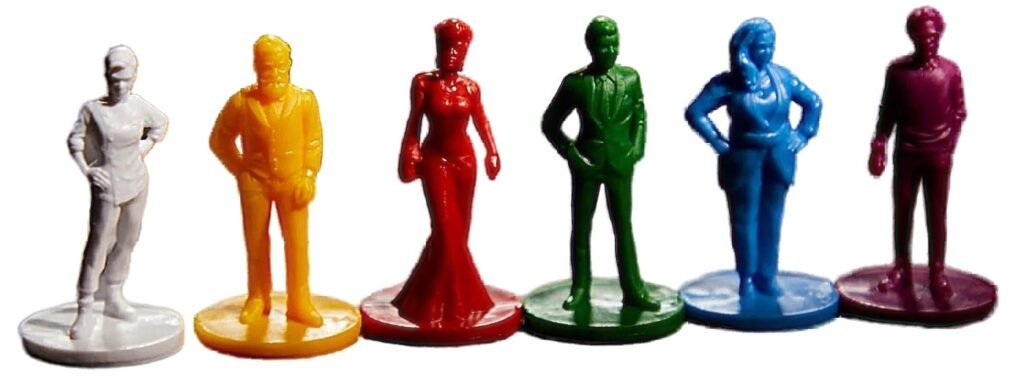
Mrs. White — Colonel Mustard — Miss Scarlett — Reverend Green — Mrs. Peacock — Professor Plum
Clue (known as Cluedo outside of North America) is a classic board game that has a rich history dating back nearly 75 years!
Was it Colonel Mustard in the library with the candlestick? Professor Plum in the conservatory Clue transforms every player into a detective piecing together the mystery of a mansion murder. It’s part deduction puzzle, part social game, and endlessly replayable. Clue (known as Cluedo outside of North America) is a classic board game that has a rich history dating back nearly 75 years.
The History of Clue
- 1943: The game was created by Anthony E. Pratt, a British musician and games enthusiast, who was inspired by the rising popularity of detective novels and murder mystery parties in the 1930s and 1940s.
- Pratt’s original idea was to create a game where players would solve a murder mystery. He conceptualized the game in a way where players could deduce the identity of the murderer, the weapon used, and the location of the crime.
- 1944: Pratt submitted his game to Waddingtons, a British board game company. The original design was quite different from the version that would later become famous, featuring characters and weapons that evolved over time.
- 1949: Waddingtons released Cluedo in the UK. The game was an immediate success and became popular in British homes.
- The game’s success caught the attention of American toy company Parker Brothers, which approached Waddingtons to license the game for the American market.
- 1949: Cluedo was renamed Clue when it was released in the United States, as the word “clue” is more familiar to American audiences than “cluedo.” The American version introduced slight changes in gameplay and design, including different weaponry and an expanded set of cards.
- Over the years, the game has seen various updates, including additional characters, weapons, and rooms, with the most notable change occurring in 1972, when the game introduced new characters and some of the original ones were replaced.
- The game became a worldwide phenomenon, with releases in numerous countries, and is still one of the most popular board games globally.
- Clue/Cluedo has inspired various spin-offs, including video games, a movie, and even a musical:
- The Clue Movie (1985): A cult classic, it featured multiple possible endings, as well as a comedic take on the original game. It’s beloved for its ensemble cast and quirky tone.
- Video Games: Several adaptations of the board game have been made into digital versions for various platforms, allowing players to enjoy the mystery in new ways.
- 1990s – Present: Clue/Cluedo has remained a favorite in many homes and has been updated with new versions, including themed editions based on popular franchises like Harry Potter, Sherlock Holmes, and Supernatural.
- The Clue brand has also expanded to include mobile apps and online versions, allowing players to enjoy the game digitally.
There are multiple fun variations on the original that cater to your favorite characters: The Office, Friends, Harry Potter, Scooby Doo, Squishmallows, The Grinch, The Muppets, and Wednesday from The Addams Family.
Why it endures: The deductive reasoning mechanic — systematically eliminating suspects, weapons, and rooms — feels satisfying every single time. Kids develop logic skills without even realizing it, and adults appreciate the psychological layer of watching what other players are fishing for.
Best for: Ages 8 and up | 3–6 players | 45–75 minutes
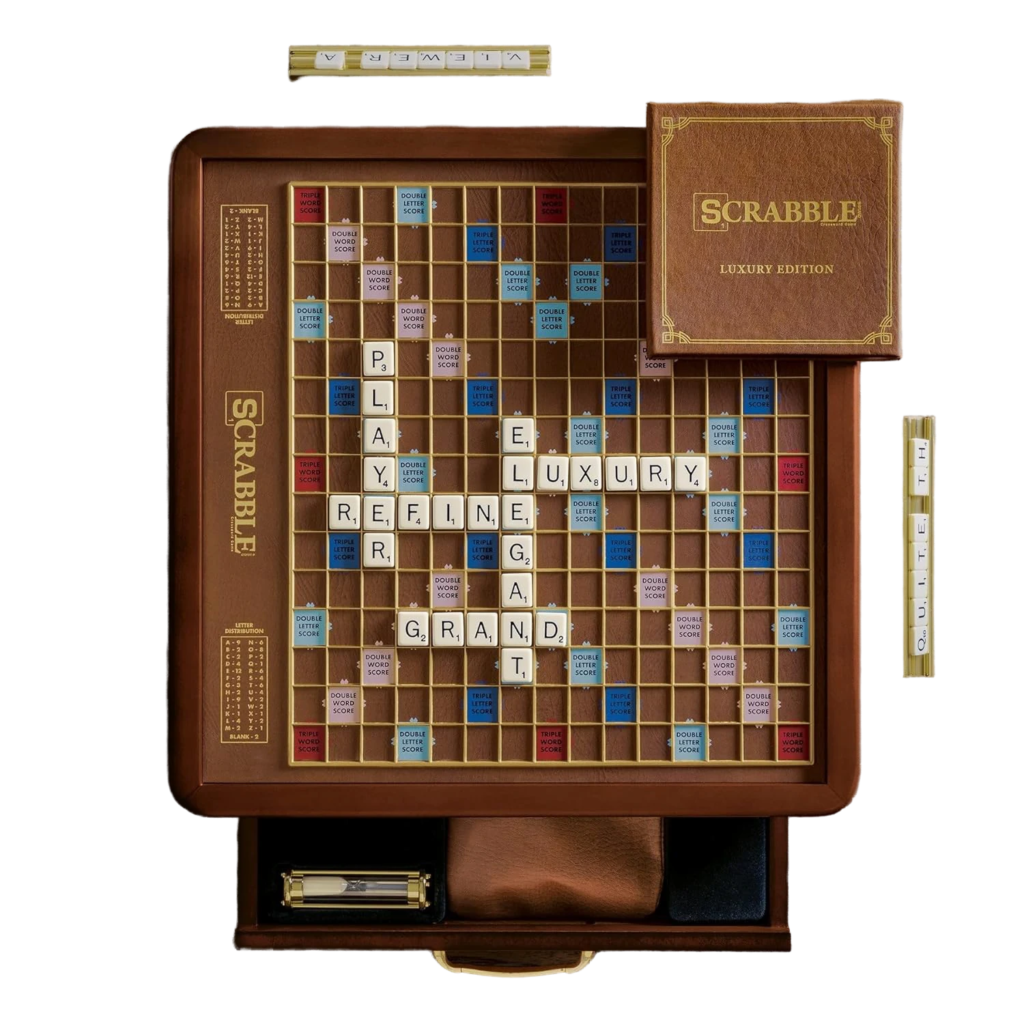
🆂 Scrabble
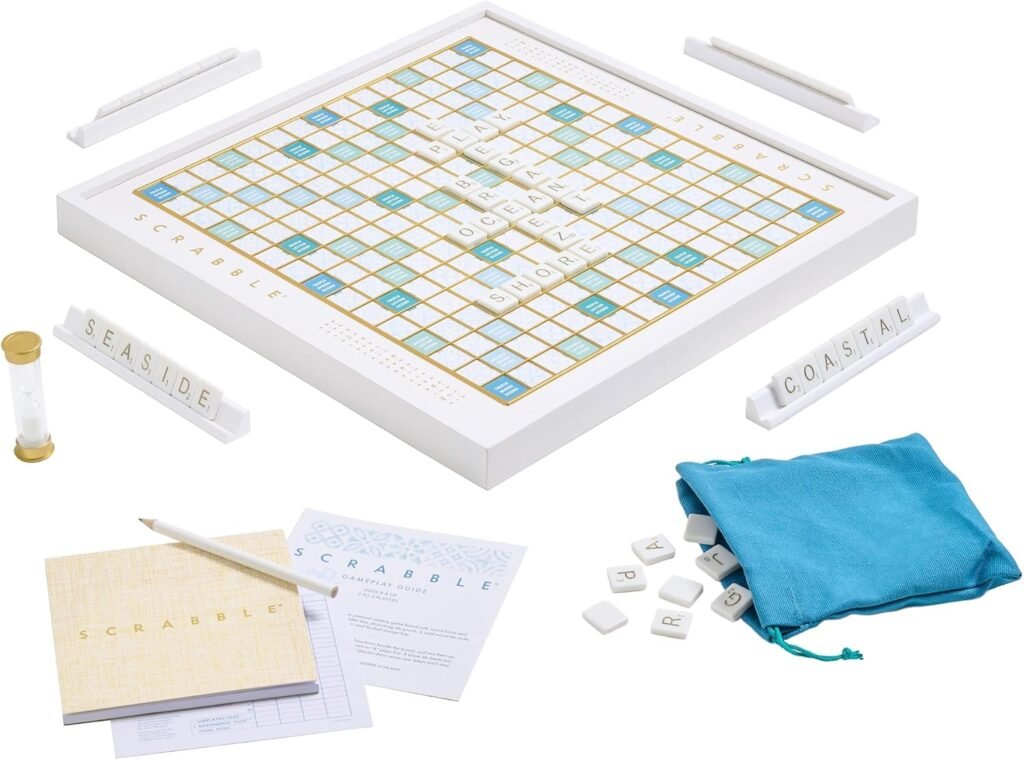
Scrabble is simultaneously a vocabulary test, a math puzzle, and a psychological mind game. The goal is simple — build words on a grid, score points — but the depth is enormous. Seasoned players memorize two-letter words like QI and ZA and map the board three turns ahead.
Scrabble was created in 1938 by Alfred Butts, an architect from New York. Initially called Lexiko, it was based on a word game he devised, but it evolved into the game we know today after being commercialized by Selchow and Righter in 1948. The game’s mix of wordplay and strategy gained significant popularity in the U.S. during the 1950s and 1960s, and it remains one of the most popular word games globally.
The strategy runs deep. While casual players focus on big words, Scrabble masters know the real game is about board control. Keeping triple-word squares out of your opponent’s reach, building parallel words that score in multiple directions at once, and managing your tile rack to maintain a healthy vowel-consonant balance are the hallmarks of expert play. The Official Scrabble Players Dictionary contains nearly 100,000 legal two- and three-letter words, and seasoned players memorize the two-letter list religiously. Words like QI, ZA, XI, OX, and JO can be the difference between a good turn and a great one.
These games all have rich histories that reflect both their evolution and enduring appeal across generations. Timeless games have survived centuries due to their ability to engage players in both strategic thinking and social interaction. Luckily, those reasons are also precisely why they are as relevant today as they were when they were first played.
Why it endures: Scrabble is one of the few games that makes players feel genuinely smarter the more they play. It’s also a rare game that works beautifully with just two players, making it ideal for date nights, quiet evenings, or a grandparent and grandchild bonding over language.
Best for: Ages 10 and up | 2–4 players | 1 hour
Chess
Chess has been played for over 1,500 years – si. That alone should tell you everything. Born in India, refined in Persia, and spread across the globe, chess is arguably the most studied, most celebrated, and most written-about game in human history.
Chess ♞ is a classic two-player strategy game with a history that spans over a millennium. Known as the “game of kings,” it is celebrated for its intellectual depth and the strategic thinking it demands. Played on an 8×8 checkered board, chess involves two opposing armies—white and black—each comprising 16 pieces. The game’s ultimate goal is to checkmate the opponent’s king, putting it in a position where it cannot escape capture.
The pieces in chess include a king, a queen, two rooks, two knights, two bishops, and eight pawns for each player. Each type of piece has its own unique movement rules.
Chess is more than just a game—it is a cultural phenomenon that has inspired art, literature, and philosophy. It has served as a metaphor for war, politics, and human decision-making. With its deep intellectual appeal, chess has become a competitive sport, featuring tournaments, championships, and international rankings governed by the World Chess Federation (FIDE).
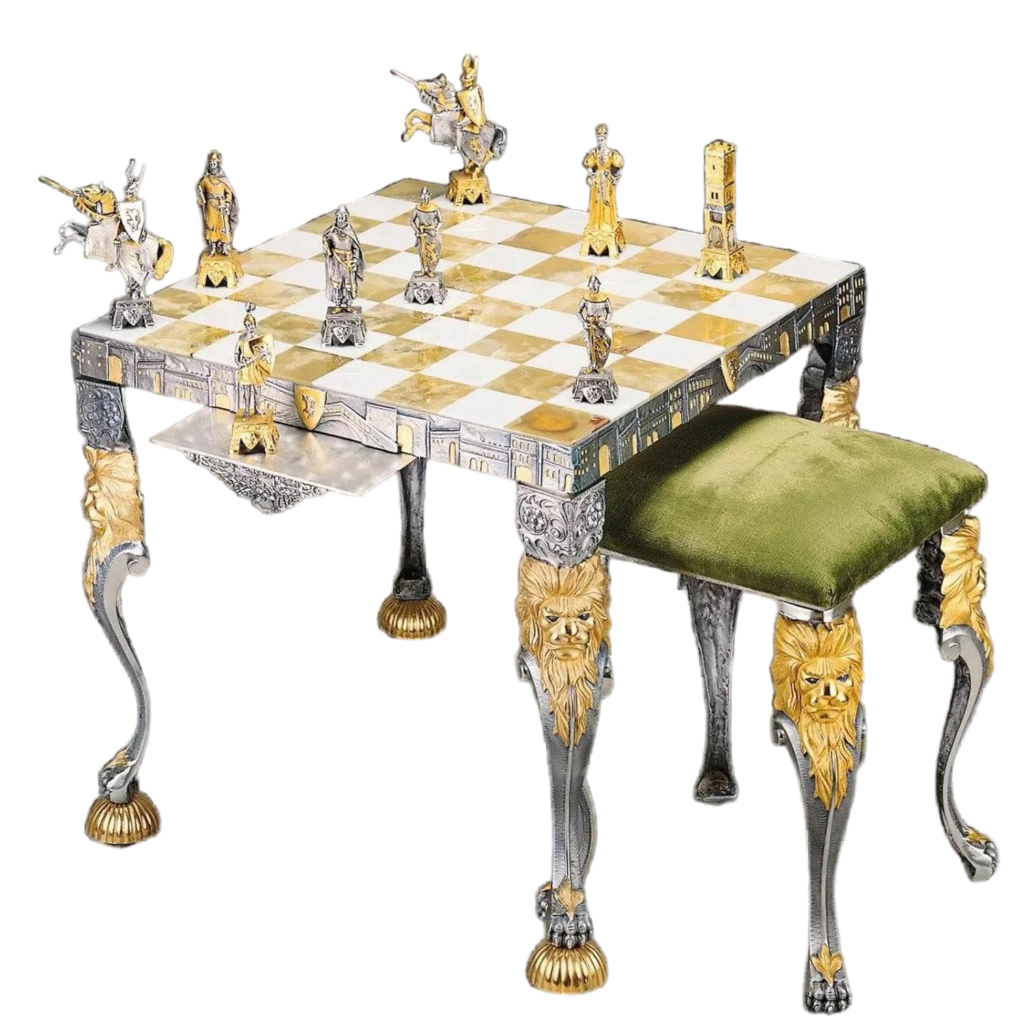
Why it endures: Chess is a pure meritocracy — no dice, no luck, just strategy. Every defeat is a lesson, and every victory is earned. The explosion of online chess platforms and the cultural phenomenon of The Queen’s Gambit introduced a whole new generation to a game their great-grandparents played.
Best for: Ages 6 and up | 2 players | 20 min – 2 hours
Othello / Reversi (1880s/1971)
Othello — marketed as “a minute to learn, a lifetime to master” — is an abstract strategy game played on an 8×8 grid. Two players alternate placing black and white discs on an 8×8 grid. Any of your opponent’s discs sandwiched between your newly placed disc and an existing one of yours get flipped to your color. The player with the most discs at the end wins. No special moves, no dice, no cards — just placement and flipping.
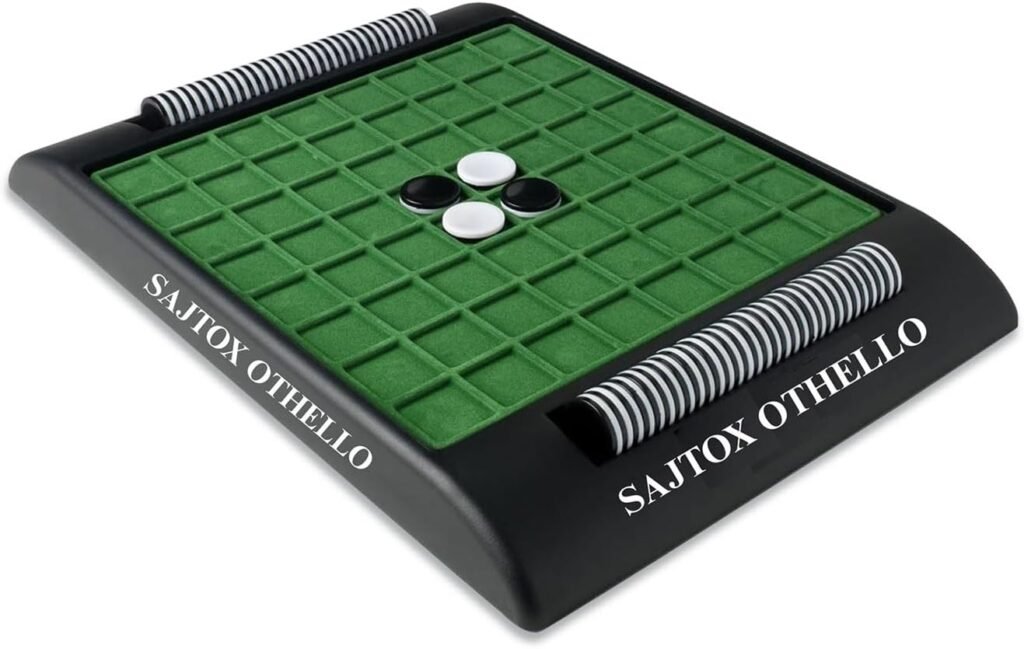

The strategy is anything but simple. Othello has been deeply studied by mathematicians and AI researchers alike. The four corner squares are the most strategically valuable positions on the board — once captured, they can never be flipped and anchor your color for the rest of the game. This creates a fascinating early-game tension where accumulating more discs can actually be disadvantageous, because a bloated disc count forces your opponent toward those precious corner positions. Expert Othello players often deliberately let their count fall behind in the midgame to control the board’s key real estate.
Why it endures: Othello’s genius is in its simplicity. The rules can be explained in under two minutes, yet the strategic depth rivals chess in many respects. The constant back-and-forth flipping of the board creates a dynamic tension that keeps both players engaged from the very first move.
Best for: Ages 7 and up | 2 players | 20–30 minutes


Candyland (1949) 🍡🍭
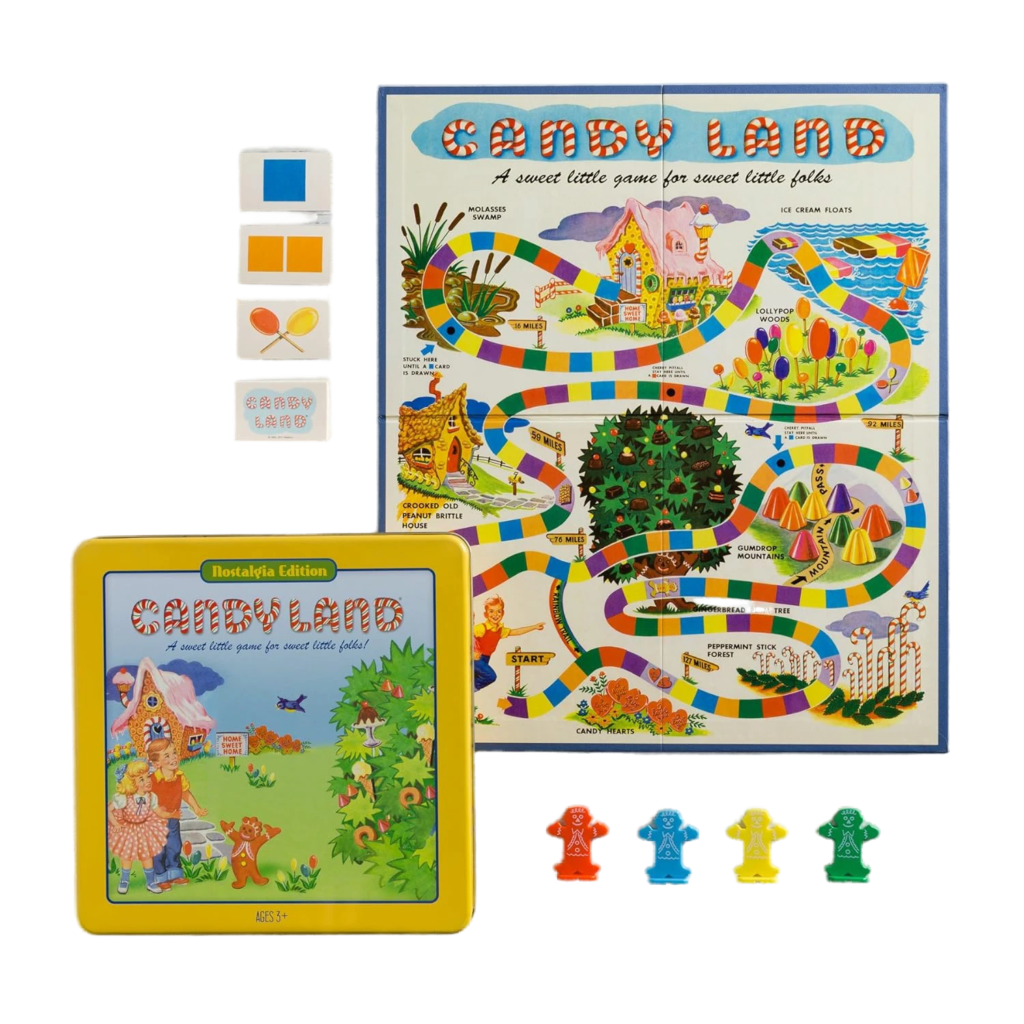
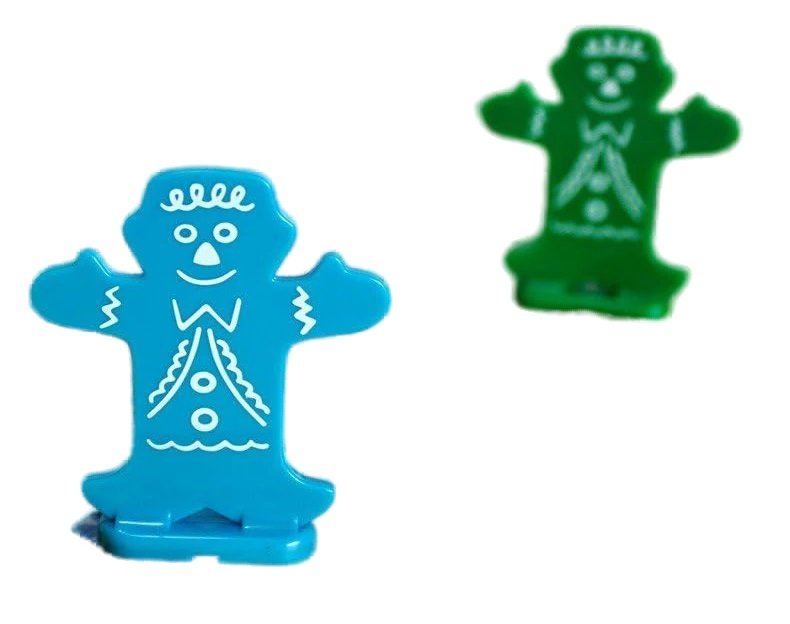
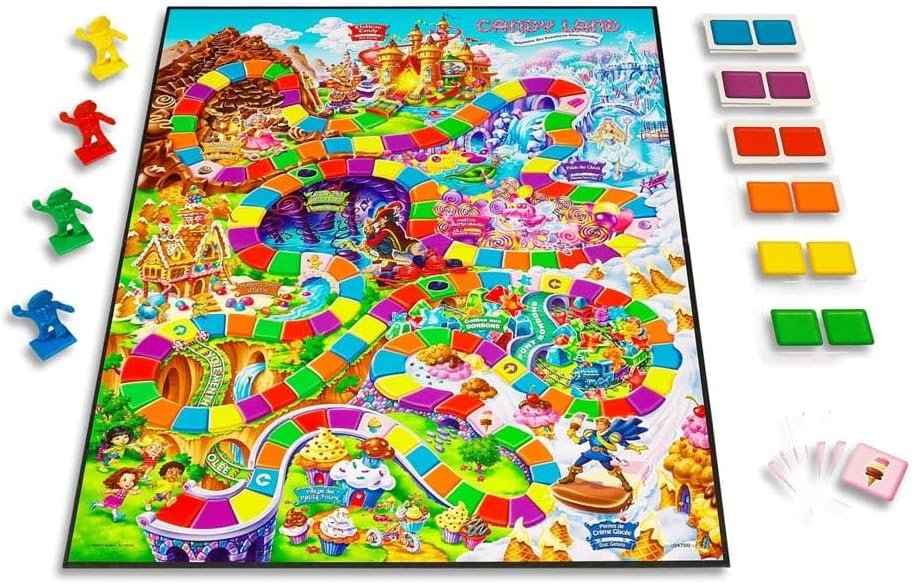
Candy Land may be the first board game millions of people ever play. Designed specifically for young children who cannot yet read, it uses colorful illustrated cards to guide players through a whimsical sugar-coated world toward the Candy Castle. Candy Land is one of the most beloved classic board games, and it holds a special place in the hearts of players young and formerly young.
People rave about how Candy Land brings joy to children and families with its simple rules and colorful, whimsical, unique design. Parents love how it introduces their little ones to the world of board games, offering an accessible game for kids who are just learning to play. The vibrant, candy-filled world of the game 🍭 is often praised for its imaginative board, featuring sugary landmarks like the Peppermint Forest and the Gumdrop Mountains. Kids love it because they get to follow a sweet path of surprises, moving their pieces through a delicious world of candy-themed locations. “The bright colors and fun characters really draw kids in,” says one enthusiastic grandparent.
Candyland’s vibrant, whimsical landscapes have long served as a source of inspiration for creativity and storytelling. From the sugary peaks of Gumdrop Mountain to the enchanting forests of Peppermint Stick Lane, its magical places spark imagination and joy. These settings remind us of the power of play and the boundless possibilities of a sweetly inspired world.
There are also different style of boards and versions. Retro. Classic. Unicorn Edition. Bluey. Cupcake Edition w/ Play-Doh. Disney Princesses. And the list goes on.
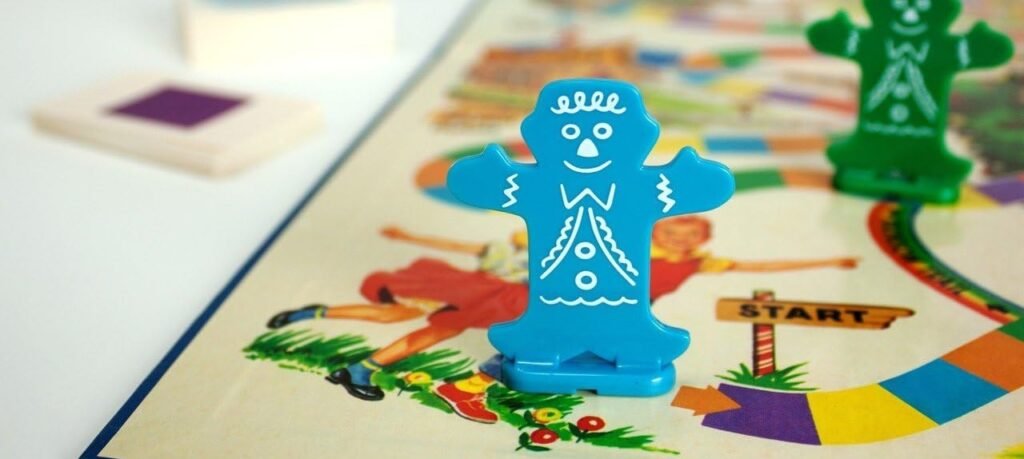
Why it matters for kids: 🍭 Candy Land teaches the foundational habits of tabletop play — waiting your turn, following a sequence, handling the disappointment of being sent back by a character card, and celebrating a friend’s win. It’s also one of the first times many children encounter imaginative narrative play. Young children often get genuinely invested in the journey of their little gingerbread person, turning a simple color-matching exercise into a small adventure.
Why it endures: 🍡 Candy Land isn’t really a strategy game — it’s an experience game. It teaches children how to take turns, follow rules, and handle winning and losing gracefully. More than anything, it’s a shared imaginative journey that carries enormous nostalgic weight for adults who played it as children.
Best for: Ages 3–6 | 2–4 players | 15–20 minutes
Check out on Amazon 👉
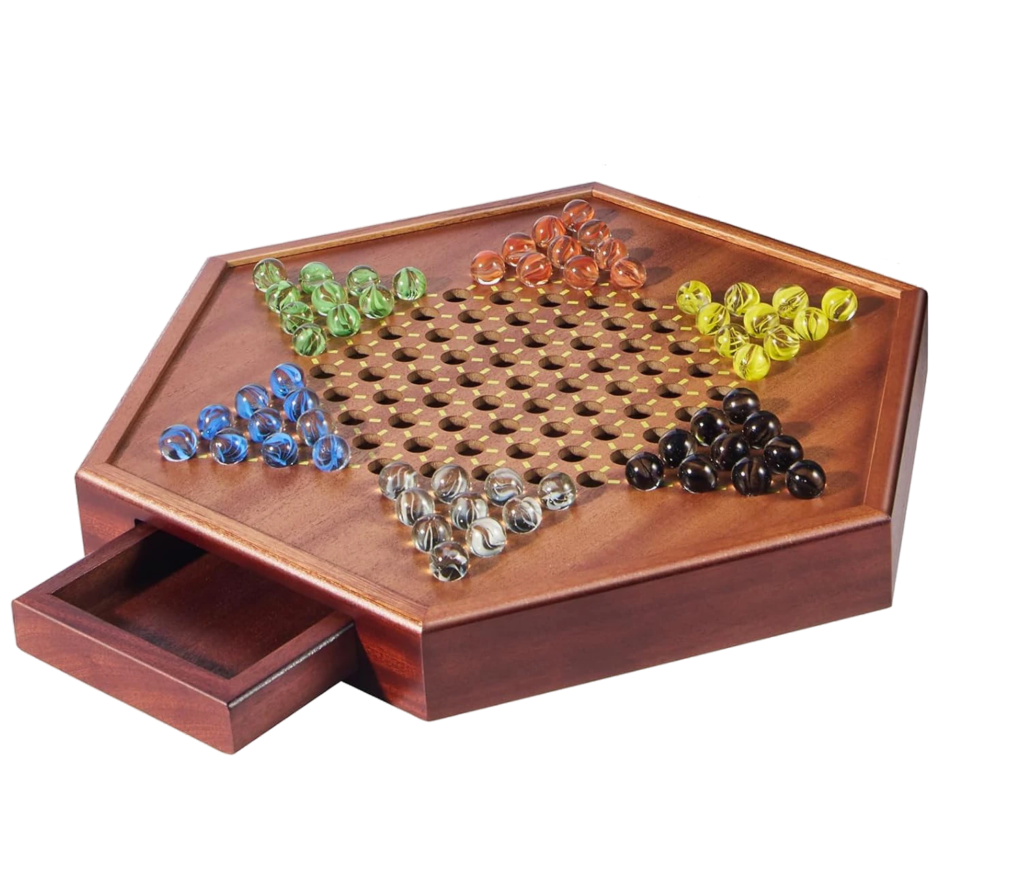
Chinese Checkers
Despite the name, it’s less about capture and more about planning paths and anticipating others’ moves.
Its charm lies in:
- The satisfying chain jumps that feel like solving a puzzle
- Multiplayer dynamics
- Constant motion
Check out on Amazon 👇
Sorry! (1929)
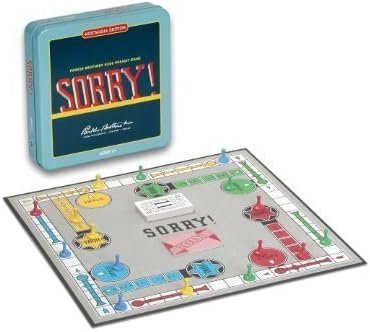
Sorry! is part racing game, part revenge fantasy — and it has a surprisingly rich history. The game originated in England, where it was patented in 1929 under a name derived from Pachisi, the ancient Indian cross-and-circle game that Sorry! is directly descended from. Parker Brothers acquired the rights and brought it to American shelves in 1934, where it has been delighting — and infuriating — families ever since. Players draw cards to move their pawns around the board from Start to Home — but the real fun comes from bumping opponents back to Start and uttering that wonderfully insincere apology.
The mechanics are brilliantly mean. Players draw cards to move their four pawns around the board from Start to Home, but the game’s real personality comes from its chaos cards. The number 4 card moves you backward four spaces. The number 11 card lets you swap places with any opponent on the board. But the most notorious is the Sorry! card itself — which lets you pluck a pawn straight from the Start pile and boot any opponent back to their own Start, delivering your apology with maximum insincerity.
Fascinating facts: Unlike most family games, Sorry! contains no dice — it’s entirely card-driven, which means the shuffled deck controls fate far more directly and dramatically than a die roll. There are also only four Sorry! cards in the entire deck, making each one feel like a thunderbolt when it appears. The word “Sorry!” was chosen deliberately to capture that very specific social moment all families know: the apology that isn’t really an apology, the polite veneer stretched thin over pure competitive glee. The game has been redesigned several times over the decades, but this essential emotional core has never changed.
Why it endures: Sorry! has one of the best emotional hooks in board gaming: the gleeful shame of ruining someone else’s progress. It’s perfectly paced for younger players, teaches turn-taking and counting, and provides adults with just enough strategic choice to stay engaged.
Best for: Ages 6 and up | 2–4 players | 30–45 minutes

Trouble 🎲
POP! The Pop-O-Matic bubble is a plastic dome encasing a single die. Instead of rolling the die freely — where it can tumble off the table, get lost under the couch, or be subtly nudged by small fingers — players press the bubble down with their palm and release it. That sound — the satisfying snap of the Pop-O-Matic bubble at the center of the board — is one of the most distinctive audio signatures in board game history. Game designers still cite the Pop-O-Matic bubble as one of the most elegant mechanical solutions in the history of tabletop gaming. Trouble was introduced by the Kohner Brothers and later acquired by Milton Bradley, becoming an instant classic thanks to one single brilliant piece of design innovation.
How it plays: Like Sorry!, Trouble is a racing game with deep roots in the ancient Indian game Pachisi. Each player controls four pegs and races them around the board toward the Finish section in the center. Land on an opponent’s space and they go all the way back to Start. Land on a Double Trouble space and you earn a bonus turn. The rules take about two minutes to explain, and the tension begins immediately.
Why it endures: Trouble manages to be exciting at every age — whether you’re a five-year-old thrilled by the POP or an adult carefully choosing which opponent’s peg to send home. It’s also remarkably durable and compact, making it a perennial favorite for travel, rainy afternoons, and multigenerational family gatherings where you need a game everyone can play together.
❤️ Who Will Love Trouble?
Anyone seeking a light, nostalgic game night that fosters conversation and shared laughs.
- Families with kids ages 5 and up, and adults who enjoy breezy, social games
- Groups that appreciate a game with quick setup, nostalgia, fast rounds, and a mix of luck and mild strategy
Best for: Ages 5 and up | 2–4 players | 20–40 minutes
Guess Who?
👇 Check out on Amazon
“Does your person have glasses?” Guess Who? is a masterclass in the power of yes/no questions and logical elimination. Introduced by Milton Bradley in 1979 and invented by game designers Ora and Theo Coster — a couple who designed over 190 games throughout their careers — Guess Who? gives each player a mystery character and a board full of 24 illustrated faces. Through a back-and-forth interrogation, players flip down faces that don’t match until only one remains.
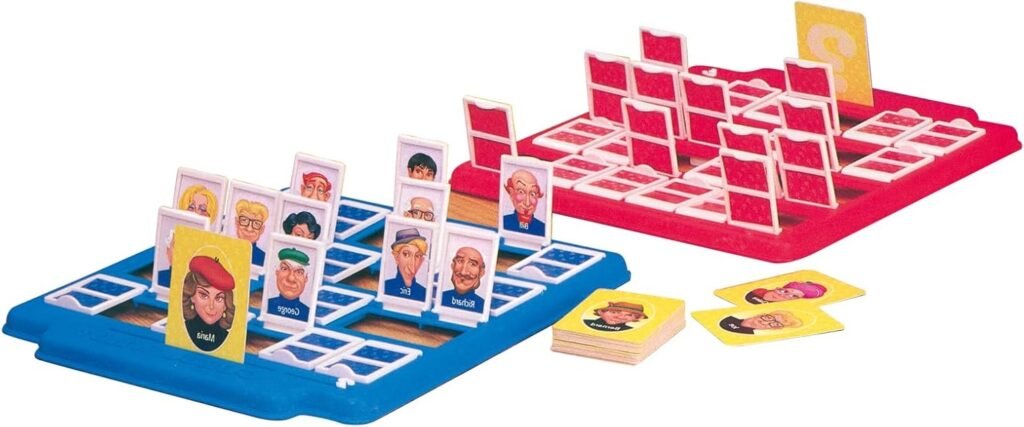
The game is secretly a logic lesson. Skilled players quickly learn that the most efficient questions are those that eliminate the largest number of faces at once. Asking “Does your person have brown hair?” might eliminate 10 characters in one go, while asking “Is your person wearing a hat?” might remove only two or three. Children who play Guess Who? regularly are, without knowing it, practicing the fundamentals of binary search logic — the same method computers use to locate data within sorted lists.
The game is secretly a logic lesson. Skilled players quickly learn that the most efficient questions are those that eliminate the largest number of faces at once. Asking “Does your person have brown hair?” might eliminate 10 characters in one go, while asking “Is your person wearing a hat?” might remove only two or three. Children who play Guess Who? regularly are, without knowing it, practicing the fundamentals of binary search logic — the same method computers use to locate data within sorted lists.
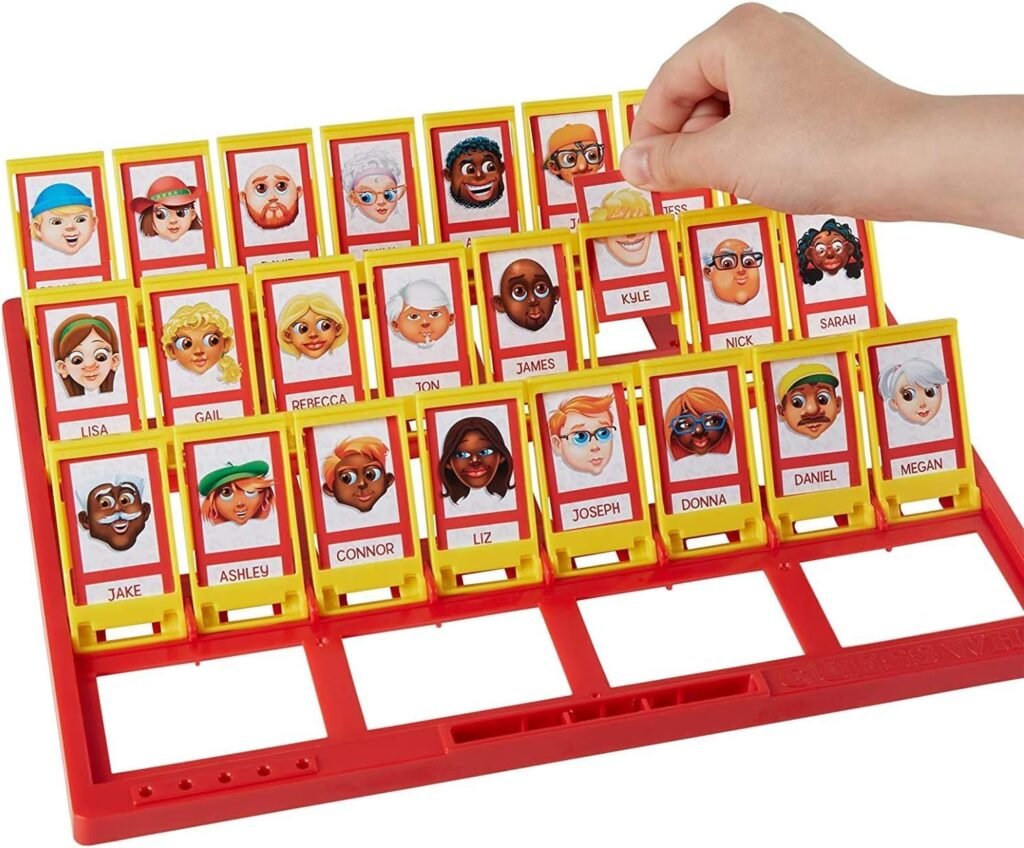

Fascinating facts: The game has also inspired countless unofficial variants, including editions featuring cats, dogs, Disney characters, superheroes, and even customizable photo-insert versions so families can play with pictures of their own relatives and friends — a surprisingly hilarious variation for family reunions.
Why it endures: Guess Who? is one of the purest deduction games ever designed for children, and it plays in under 15 minutes — which is exactly the right length when you’re playing with a six-year-old. There’s also something irresistibly theatrical about the slow reveal at the end: “Is your person… Philip?” The suspense is real, even in the silliest circumstances.
Best for: Ages 6 and up | 2 players | 10–15 minutes

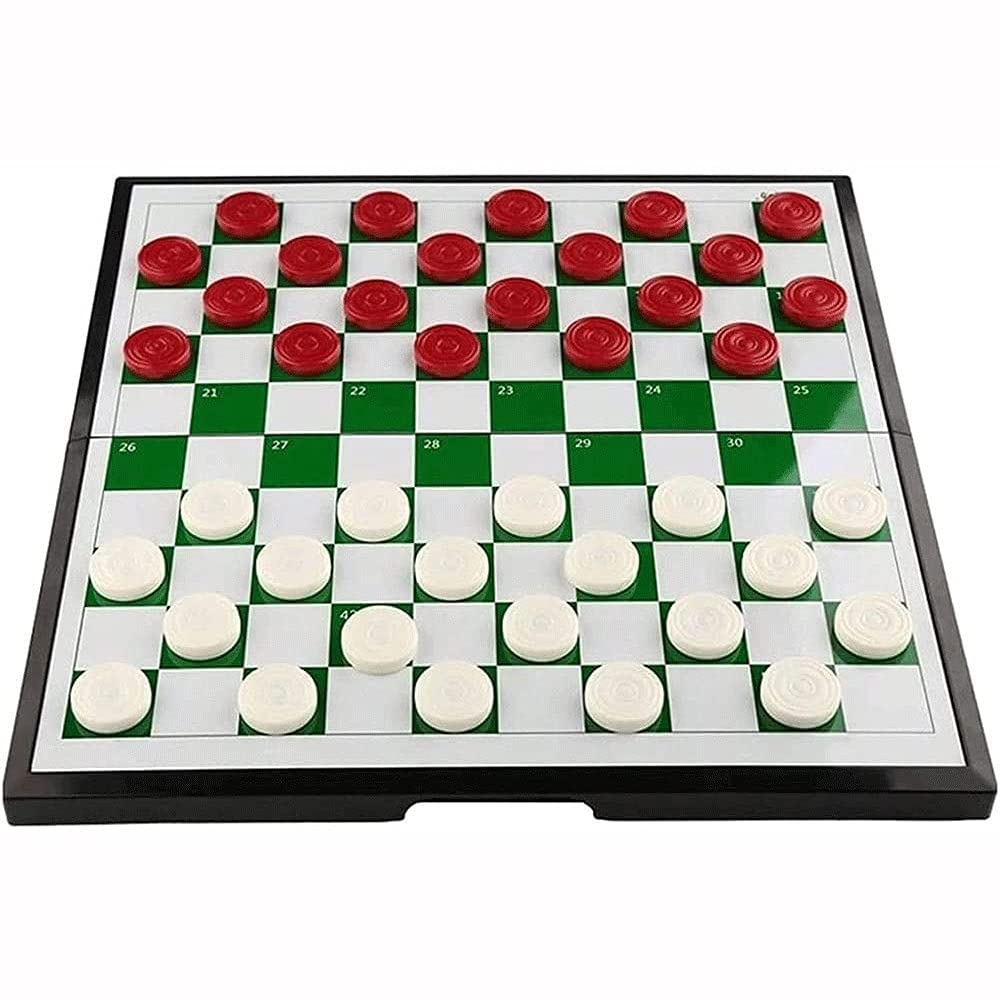
Checkers / Draughts (12th Century)
Checkers often gets unfairly dismissed as “Chess’s simpler cousin,” but anyone who has played at a competitive level knows the game has surprising strategic depth. The basics are learnable in minutes, but mastering the forced-capture rules and king strategies takes real practice.
A brief history. The earliest known version of Checkers was called Alquerque, played on a 5×5 grid in the medieval Arab world as far back as the 10th century. It spread to Europe through Moorish Spain, where French players around the 12th century had the pivotal idea of moving the game onto a chess board and adding the rule of forced captures — if you could jump an opponent’s piece, you had to. This dramatically increased the game’s tactical tension and set the template for every version that followed. By the 16th century, the game had spread across Europe under various names: Draughts in England and Ireland, Dame in France and Germany, Dama in Italy, and Damas in Spain and Latin America. When colonists brought it to America, “Checkers” became the dominant name, a reference to the checkered board it’s played on.
The game runs deeper than it looks. Standard Checkers (also called English Draughts) is played on the dark squares of an 8×8 board, with each player controlling 12 pieces. The forced-capture rule is the game’s great equalizer — it removes the option to play passively and forces confrontation. Becoming a King by reaching the opponent’s back row unlocks movement in both directions and is often the turning point of a game. But high-level Checkers strategy goes well beyond Kings. Expert players think in terms of tempo — controlling who is forced to move and when — and opposition, the art of cornering your opponent so their own pieces block them. The strategic vocabulary of Checkers is genuinely deep, with entire books devoted to its opening theory.
Checkers proves that simplicity doesn’t mean shallowness.
It’s easy to learn in minutes, making it accessible for all ages, yet experienced players know:
- Position matters deeply
- Sacrifices can be powerful
- One mistake can change everything
Its beauty lies in how quickly it brings people together — no long explanations required.
Why it endures: Checkers is the ultimate accessible classic — portable, inexpensive, and playable across every age gap imaginable. It’s one of the first strategy games most children encounter, and it remains a wonderful bridge between generations.
Best for: Ages 5 and up | 2 players | 15–30 minutes

👇 Check it out on Amazon
Sum it Up
Classic board games continue to bring families together because they offer something screens can’t: face-to-face fun, laughter, and lasting memories.
Starting a weekly game night with even one of these timeless favorites can transform how families spend time together.
In an age of digital entertainment, classic board games remain among the most popular purchases for families, educators, and casual players.
They offer unique benefits including screen-free interaction, skill development for all ages, high replay value and affordable long-term entertainment.
Classic board games are irreplaceable in certain things they offer. They trigger emotional peaks; Classic games generate anticipation, surprise, triumph, and friendly rivalry and striving for excellence, among others. This emotional cycle makes them memorable and irreplaceable in what they offer.
Tips for the Perfect Family Game Night
Now that you’ve got your list, here are a few quick tips to make your game nights even better:
Match the game to the group. A room full of competitive adults might love Risk or Trivial Pursuit, while a mixed-age family gathering calls for something like Sorry! or Yahtzee that keeps everyone equally invested.
Set the mood. Clear the table, put on some background music, and make a snack spread. Game nights feel more special when they’re treated as events, not afterthoughts.
Establish house rules. Many classic games have well-known “house rules” — like Free Parking in Monopoly — that change the experience. Decide on your rules before play begins to avoid mid-game disputes.
Let kids win sometimes (but not always). Nothing teaches resilience like a graceful loss, but crushing a seven-year-old at Scrabble every single time won’t make them want to play again next week.
Go analog on purpose. Put the phones away. The whole point of a board game is the face-to-face connection — the laughter, the trash talk, the shared experience of something happening right here, right now.
| Best for Families | Best for Kids | Best for Strategy | Best for Social |
| Monopoly | Guess Who | Chess | Clue |
| Trouble | Chinese Checkers | Othello | Monopoly |
| Clue | Candyland | Scrabble | Sorry! |
| Scrabble | Checkers | Chinese Checkers | Trouble |
| Why: Encourages conversation and multi-age participation. | Why: Simple rules with quick rewards. | Why: Deep tactical thinking required | Why: High interaction and emotional engagement |
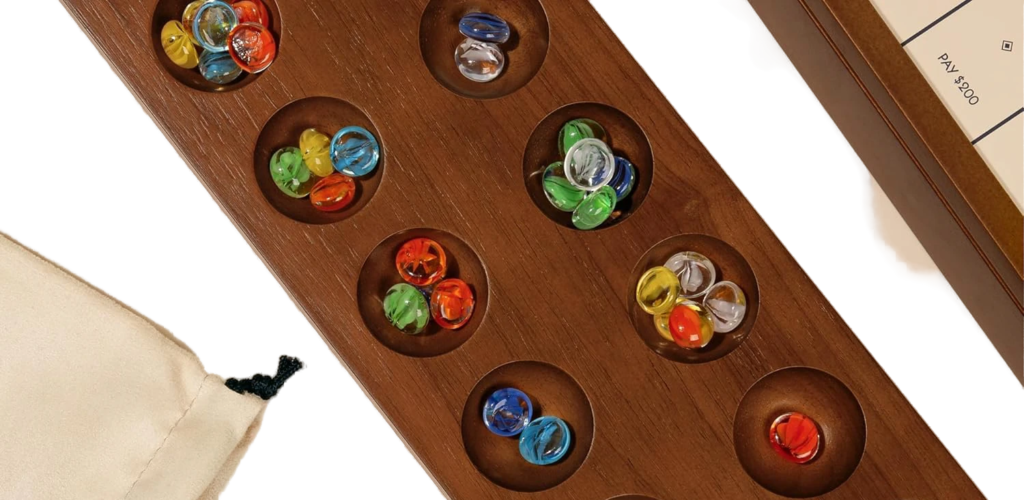
Bonus: For two players, Mancala is, I’ve found to be a really good social game. Both players are focused on the gameplay but there is enough downtime and extra attention where really good conversation is almost facilitated to happen. In my experience this wasn’t quite the case with Othello where more focus was needed.
We live in a world of endless digital distraction, yet classic board games continue to sell millions of copies every year. The reason is simple: they offer something screens fundamentally cannot. They put us in the same physical space, force us to look at each other’s faces, and create shared memories that last decades.
The games on this list have survived world wars, the rise of television, the video game revolution, and the smartphone era. They’ve endured not because of nostalgia alone, but because they’re genuinely, timelessly fun.
So the next time the weekend rolls around, skip the scroll and reach for a box instead. Your family — and your memories — will thank you.
Budget Find!
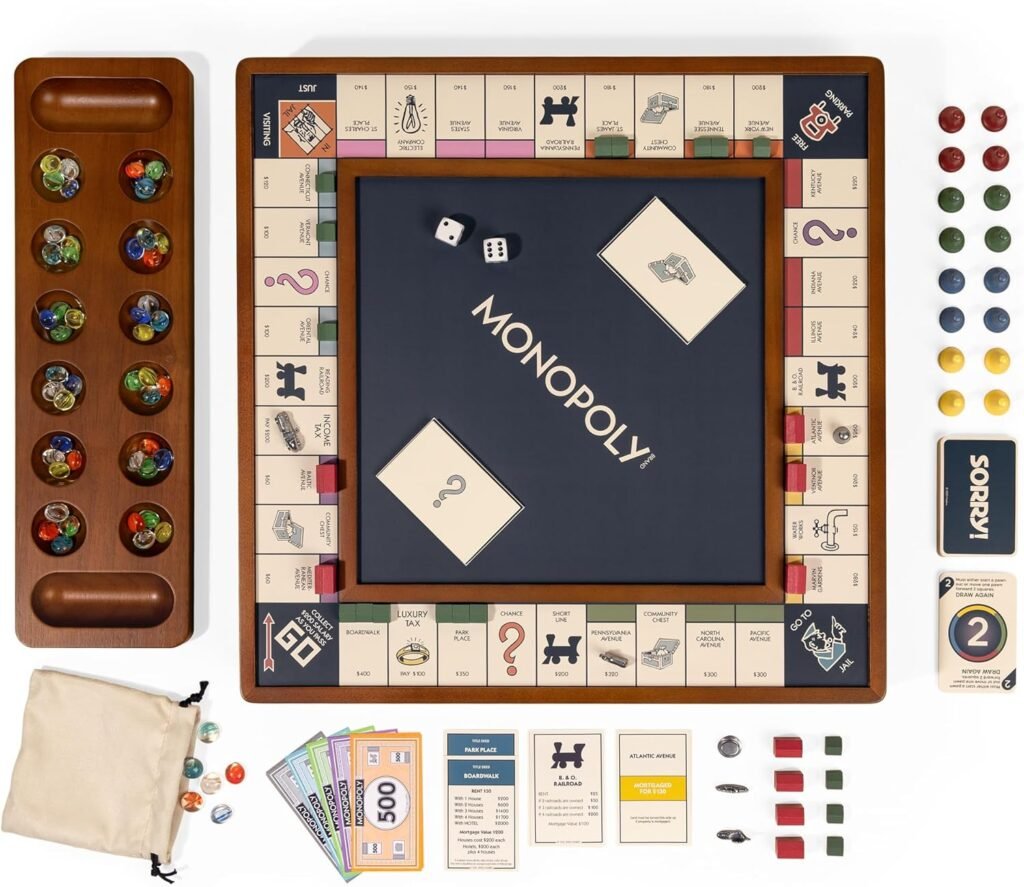
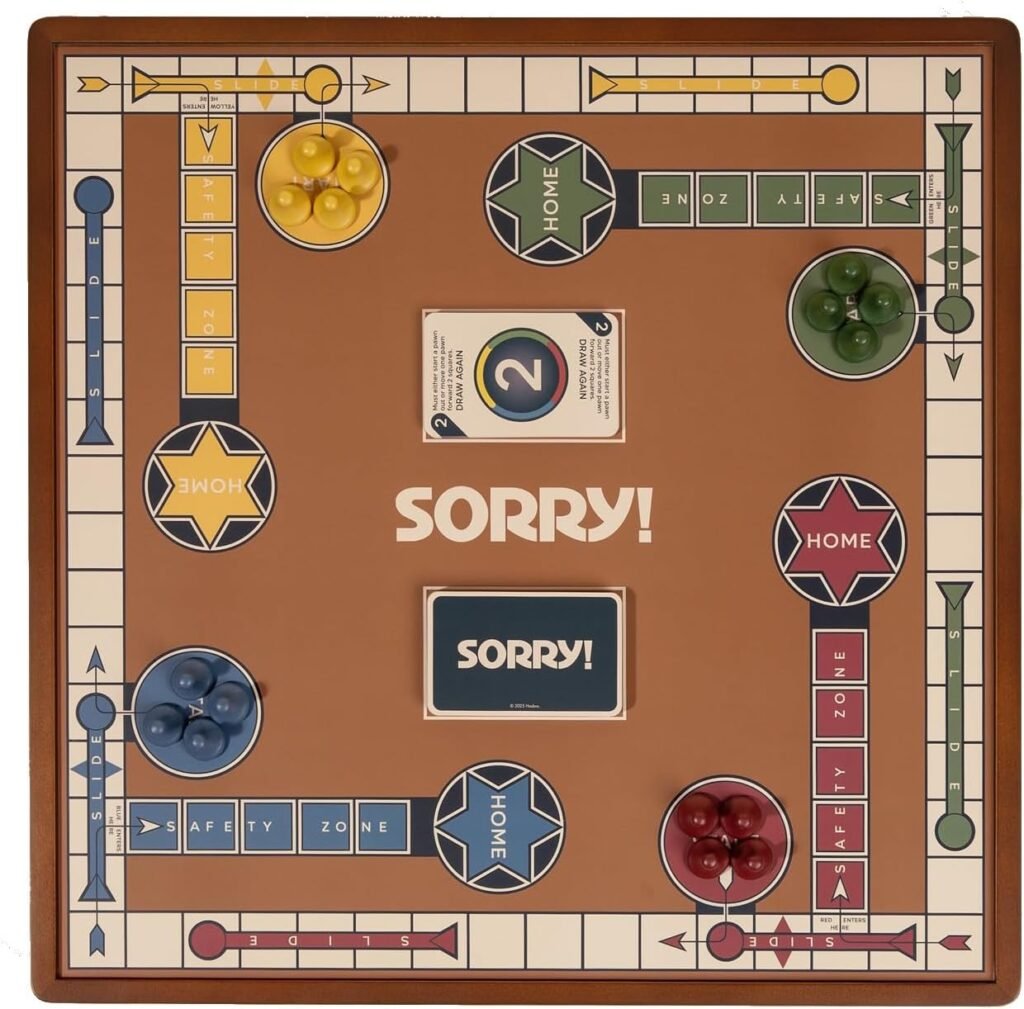
3-in-1 Wooden Set with Reversible Board and Integrated Storage. This set is Monopoly, SORRY! and Mancala all together in one high quality, durable set.
Splurge Option:

Absolutely aesthetic and neat and tidy collection of quintessential board games.
Not only are these designed to sit beautifully on your bookcase, they’re also vintage versions of the games (so bring on the nostalgia!)
Set includes: Monopoly – Clue – Scrabble – Yahtzee – Guess Who? – Boggle – Jenga – Mystery Date – Candy Land – Scattergories – Battleship – Risk – Trouble – catch phrase – Sorry! – Connect Four – Life – Trivial Pursuit – Taboo – Chutes and Ladders – Chess – Checkers & Backgammon
Play your favorite games, or learn some new ones – they’re all here at your fingertips with this expansive set
Related:
(Board Games Reimagined ) Elevated Style – Classic Games in Aesthetic Lucite
Which classic board game is your all-time favorite? Drop it in the comments below!
Leave a Reply